


Choosing your skis
Find your
PUSU.
We help you choose skis by where and how you ski.
Choose how you ski. We’ll show you suitable models.
Which skis suit me?
Choose where you ski and what kind of feel you’re after.
Compare dimensions and construction ↓
Kajo 85
An easy-handling piste ski.
Kajo suits groomed pistes, even when the snow softens and piles up during the day. It is easy to change your turn.
Discover Kajo →
Piste 75
Grip on hard pistes. Precision in tight turns.
Piste grips on hard and icy pistes and seeks a tight, carved arc. If you also want to use the rolls and soft edges of the piste, compare it with Ahjo 90.
Discover Piste →
Aava 95
For the piste and the fells.
Aava combines piste days, soft edges and fell terrain. If your trip leans towards soft snow, compare it with Loska 100.
Discover Aava →
Aurora 110
For soft-snow days.
Aurora’s width adds float and its long rocker a surfy feel in soft natural snow. If you also ski a lot on the piste with the same pair, compare it with Loska 100 or Aava 95.
Discover Aurora →
Aava 95
For the piste and the fells.
Besides piste days, Aava is good for climbing when fitted with touring-capable bindings and skins. If the goal of your climb is above all a soft-snow descent, have a look at Aurora 110 as well.
Discover Aava →Explore the whole collection.
Alpine skis for the piste and natural snow. Plus the Halo snowboard and Kaira skiable snowshoes.
Piste ski
Kajo 85
An easy-handling piste ski.
Easy to change your turn, even on a piste that has softened during the day.
Discover Kajo →
Freecarve · piste
Ahjo 90
Tight turns and the shapes of the piste.
A stiff ski for active skiing and the rolls of the piste.
Discover Ahjo →
All-mountain · touring
Aava 95
For the piste and the fells.
A versatile pair you can also climb with on skins.
Discover Aava →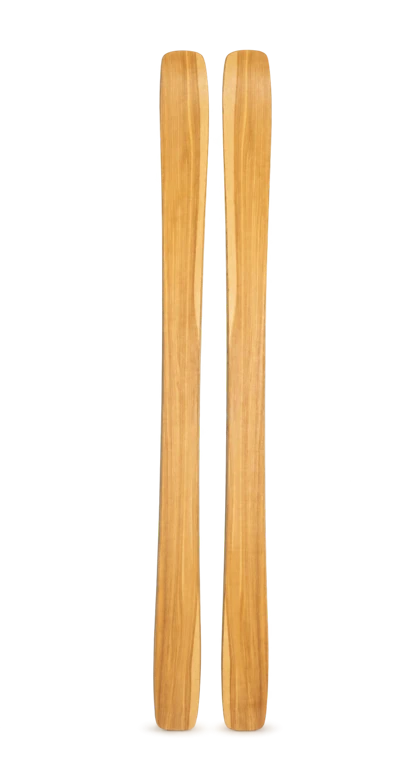
Freeride · all-mountain
Loska 100
One pair of skis for an Alpine trip.
Piste and soft snow on the same pair.
Discover Loska →
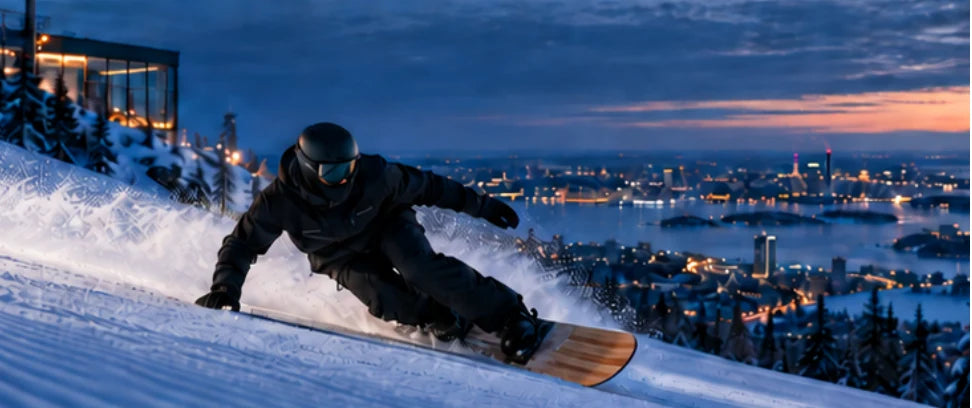
Coming soon · freecarve snowboard
Halo 260
A handmade snowboard for carving the piste.
A freecarve snowboard for clean carved turns on groomed pistes.
Discover Halo →
Skiable snowshoes
Kaira 95
For trips without tracks.
172 cm for trips without groomed tracks. Ask us about availability of the shorter 140 cm model. Bindings and waxing are included in the ready-to-ski package.
Discover Kaira →Compare the models in more detail.
How do the models differ? See the intended use, the dimensions and how the construction affects the ride.
Piste, Kajo or Ahjo – which skis for the piste?
Piste for hard pistes, Kajo for easy handling, Ahjo for active skiing.
Piste 75
75 mm underfoot · carving
- Choose it when: A hard or icy piste and a tight, carved arc are what matter most.
- Construction and feel: Long camber, little tip rocker and a torsionally stiff build support edge grip. Piste is stiffer longitudinally than Kajo and has a tighter turn.
- Also compare: Kajo for an effortless full day. Ahjo if the shapes and soft edges of the piste tempt you.
Kajo 85
85 mm underfoot · piste
- Choose it when: You want an easy-handling piste ski for the smooth morning piste and the afternoon slush.
- Construction and feel: More tip rocker and a softer longitudinal flex than Piste. Taper at the ends, the flex and the overall balance make it easy to release the ski from the edge.
- Also compare: Piste for hard pistes. Ahjo when you want stiffer support and a tight arc.
Ahjo 90
90 mm underfoot · freecarve
- Choose it when: You want to load the ski on its edge and bring the shapes of the piste into your skiing.
- Construction and feel: A stiff longitudinal flex, a damp build and rocker in the tip and tail. The width is also chosen to give the boot room when edging hard.
- Also compare: Piste if hard, icy pistes decide it. Kajo if you want a pair that is easier to load.
Want an easy starting point? Start with Kajo when effortless piste skiing matters most. Still, choose by how you ski and the feel you want: the same model can serve both a developing and an experienced skier.
Aava, Loska or Aurora?
How the balance between piste days, climbing and soft snow differs.
Aava 95
95 mm underfoot · dual turning radius
- Choose it when: You want to combine piste days, fell descents and the option to climb on skins.
- Construction and feel: The tip radius is tighter than the tail: 14/16 m in 162 cm and 15/17 m in 172 cm. The tip guides you into the turn, the gentler tail calms the steering. Gentle tip rocker and a fairly flat tail also support climbing and telemark.
- Also compare: Loska for the piste and soft-snow days of a trip. Aurora when float in natural snow decides it.
Loska 100
180 cm: 131–100–124 mm · radius 17 m
- Choose it when: You want one pair of skis for a trip where you ski both the piste and soft snow.
- Construction and feel: Tip rocker helps in soft snow, tail taper makes it easier to release from the turn. The new fibre construction is slightly stiffer in front of the binding and at the same time slightly livelier than before.
- Also compare: Aava if skin touring weighs in your choice. Aurora if soft snow is the clear priority.
Aurora 110
180 cm: radius 18 m · 190 cm: radius 19 m
- Choose it when: You want float and a surfy feel in soft natural snow.
- Construction and feel: Long, gentle rocker in the tip and tail, a flat profile underfoot and tapered ends. The stiff overall build aims for controlled flex even in heavy soft snow.
- Also compare: The width slows edge-to-edge transitions. Compare with Aava or Loska if you ski a lot on groomed pistes.
Kajo or Aava? Ahjo or Aava?
Beyond piste days, onto the fells or on skins.
Kajo or Aava?
Kajo is the starting point for an effortless piste day and for changing your turn easily. Choose Aava when fell terrain or skin touring weigh alongside your piste days.
Ahjo or Aava?
Ahjo is stiffer and turns tighter. Aava is the option with a wider turn and broader use when you want one pair for climbing too. You can carve on both; the difference is what you want to emphasise.
Which PUSU models suit telemark?
Aava first. Kajo as the second option.
Aava 95
Start with Aava. The shape of the tail and the balance between turning radius and width make it our first telemark recommendation from the current collection.
Kajo 85
Compare with Kajo if you value an effortless piste day. Kajo is our second telemark recommendation and an option that is easy to load.
Piste can be considered by skiers who want a narrow, tight-turning piste feel. Ahjo is an option especially for those who want a stiff freecarve feel; its tail rise may feel different in telemark. The binding and boot setup is confirmed according to how you ski.
Which skis suit skin touring?
Aava for all-round use. Aurora when the soft-snow descent comes first.
In skin touring you climb using skins and touring-capable bindings. Choose the ski also by the kind of descent you’re after.
Aava 95
Aava is the first starting point when you combine climbs, fell descents and piste days. Moderate weight, a gentle tip rise and a fairly flat tail support skin touring.
Aurora 110
Aurora is an option when the goal of the climb is a descent in soft natural snow. It can be fitted with skins and touring-capable bindings. The emphasis is on float and the feel of the descent.
Ski, binding, boot and skin form one setup. Tell us how you ski and we’ll help you choose the right gear.
When Kaira — and which length?
For touring without tracks. Terrain, agility and float decide.
Choose Kaira 95 when you want to glide through snowy forests and along your own routes. If you climb the fells to ski down, start your comparison with Aava.
Kaira 140 cm
Choose the shorter Kaira when agility in dense forest, boggy thickets and tight changes of direction matters most. Ask us about 140 cm availability before ordering.
Kaira 172 cm
Choose the longer Kaira when float in snow matters most. The length is chosen by how you will use it, not just by your own height.
Steel edges or not? Edges add grip on harder snow, on side slopes and for descents on a trip. Without steel edges is an option for flatter touring, including for those out with a dog.
Kaira’s Universal bindings and waxing are included in the ready-to-ski package. The bindings fit flexible-soled outdoor boots in sizes 36–46. Check whether your own boots fit on the Kaira page.
Is Halo my board?
A freecarve board for clean carved turns on groomed pistes.
Discover Halo 260 when you want a snowboard for riding on the edge and love a clean arc carved into a groomed piste. Halo is 162 cm long and 260 mm wide. On the product page you’ll find more details and help with checking fit and availability.
How do I choose length and bindings?
Model-specific help is on each product page.
Length and equipment choices are made on each model’s page. Tell us where and how you want to ski: the right length takes into account the skier’s size and the desired feel as well as the model.
You can choose alpine skis without bindings. If you need bindings, they are chosen by your boots and by piste, skin-touring or telemark use. Kaira’s Universal bindings are included in its ready-to-ski package. Halo’s fit is checked based on its own size.
What do width, turning radius and rocker tell you?
Specifications help when you know what difference you’re looking for.
Width underfoot: The waist widths of PUSU’s six alpine skis are 75, 85, 90, 95, 100 and 110 mm. Width is one part of the whole: for example, Ahjo’s 90 mm supports piste skiing, while Aurora’s 110 mm emphasises float in soft snow.
Turning radius: The figure describes the ski’s sidecut. It does not set the size of every turn you ski: how you load and tip the ski and the snow also shape the arc. On Aava, the tip and tail radii are different.
Rocker and taper: Rocker means the rise of the tip or tail. Taper is the narrowing of the ski towards its ends. On Loska, for example, the tip rise helps in soft snow and the narrowing tail makes it easier to release from the turn.
Flex and torsional stiffness: Longitudinal flex describes how the ski bends, torsional stiffness how it resists twisting. Kajo is softer longitudinally than Piste, but that does not mean it is loose torsionally.
Choose a setup that suits your use. Width, radius or stiffness alone does not tell you how a ski feels.
The recommendations are based on PUSU’s own product development and the models’ intended uses. What matters most is finding the feel that suits your skiing.
We’ll help you choose.
Tell us which models you are considering and what you want from your skis. We’ll help you find the right option.
Ask us →